Thickness and Layer Architecture: Why Total Height Can Mislead
Look at what each layer does and how much usable material remains under load. This chapter translates material-science and veterinary references into practical questions for comparing finished dog beds.
Original explanatory illustration. Any curves, shapes or contact patterns are conceptual unless explicitly described as published measurements.
Everyday analogy
Think of a hiking boot: a soft insole affects the first feel, while the midsole and outsole contribute structure. Measuring only the boot’s total height tells you little about how it behaves.
Total bed height versus foam thickness
A product’s advertised height may include the cover, quilting, bolsters, padding, seams or a base. Ask for the actual sleeping-surface height and the thickness of each foam layer. A tall bed can contain a thin foam slab; a lower-profile bed can use a more substantial core. The label alone does not settle the question.
Layer architecture
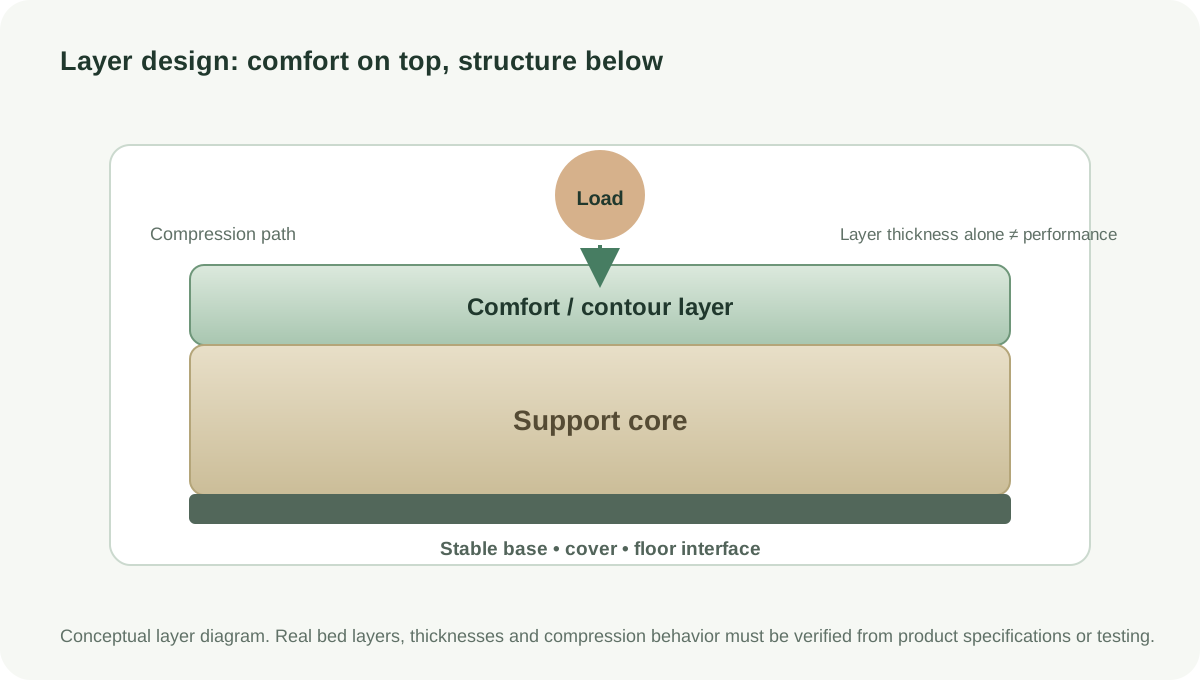
A common design uses a comfort layer over a more resilient support core. The top layer influences initial contouring and feel; the core contributes much of the structure under deeper compression. Some products use one foam type throughout, while others use several layers or a convoluted profile. These design descriptions should be confirmed by a cross-section, specification sheet or manufacturer response.
Bottoming-out as a practical concept
Bottoming-out means the usable foam compresses so far under load that the dog’s body approaches or contacts the underlying hard platform. It can depend on local load concentration, dog size and body condition, sleeping position, foam properties, thickness and the floor or deck beneath the bed. There is no single thickness number that guarantees it will not happen.
How to compare
Request layer-by-layer thickness, density and any IFD or fatigue values. Check whether the sleeping surface is level, whether the core is continuous beneath the dog’s resting area, and whether bolsters reduce the usable interior. If no technical data are disclosed, compare the return policy and inspect the bed under the dog’s normal use rather than relying on a generic inches-per-pound formula.
Evidence boundary
Do not publish fixed minimum thickness rules by dog weight unless they are tied to a defensible test or manufacturer specification. Thickness is only one part of the system.
Common questions
Is a thicker dog bed always more supportive?
No. Total bed height may include bolsters, lofted fill or a soft top layer. Ask for the actual foam-core thickness and the thickness of each layer. Material properties and the assembled design matter as much as overall height.
What does bottoming out mean?
Bottoming out is when the foam compresses enough that the load is no longer meaningfully cushioned by the intended foam layer. A buyer can look for deep, persistent hollows or contact with the hard base, but this is a practical observation—not a standardized medical test.
How many foam layers should a bed have?
There is no universal ideal layer count. A single foam slab or a layered design may work differently depending on formulation, density, firmness, thickness, bonding and cover construction. Ask what each layer is made from and what function it is intended to provide.
These answers summarize material and product-selection information. They are not veterinary advice or a substitute for product-specific manufacturer specifications.
Research and technical references
These sources support the material-science definitions or the specific research summary above. A foam-material study is not automatically a test of every retail dog bed.