Choosing an Orthopedic Dog Bed for a Senior Dog
For an older dog, comfort is only one part of the decision. Look at access, stability, sleeping space, cleaning and the way the mattress behaves under your dog’s weight.

In this guide
Make getting on and off easier
Check the top-of-mattress height and the height of any raised sides. A low-entry edge can be easier to step over than a tall bolster. Make sure the dog does not have to jump onto the bed. If the dog is struggling to rise, seems painful or has a new mobility change, discuss it with a veterinarian rather than relying on a bed change alone.
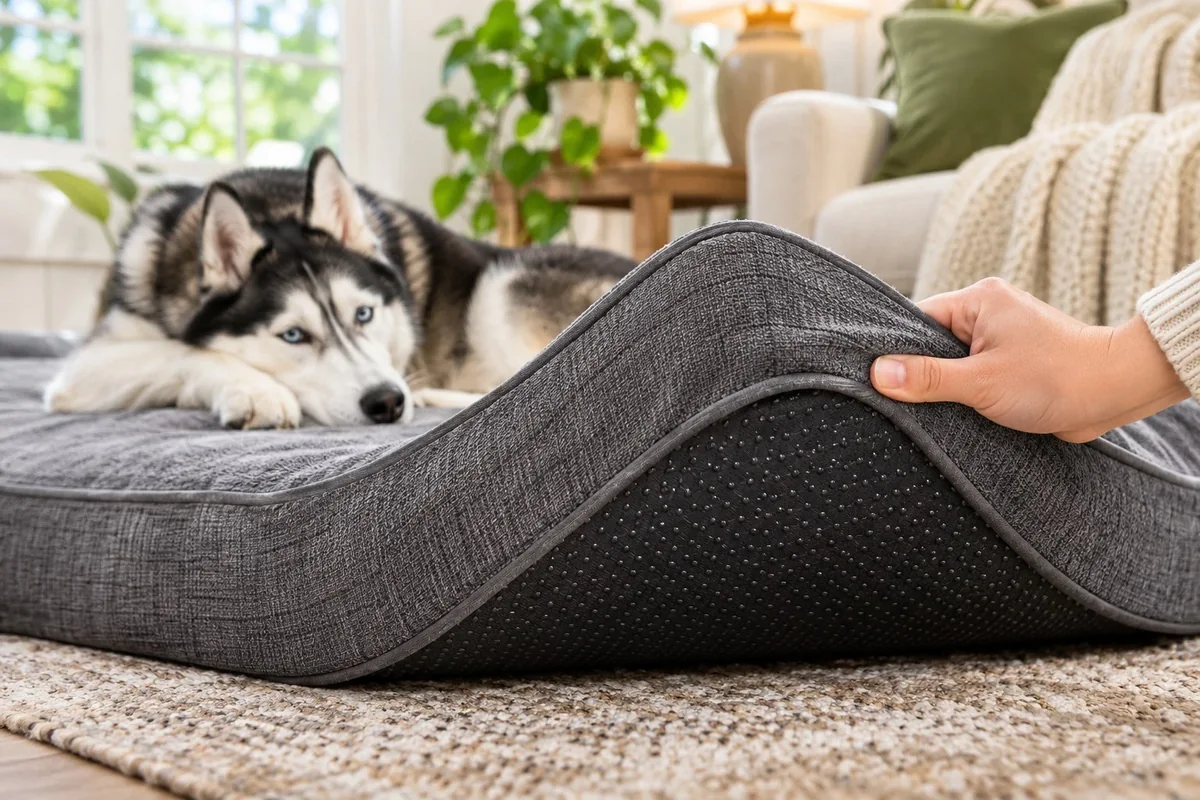
Look for support that stays stable
A supportive bed should not shift or fold when the dog changes position. Check the mattress for deep compression and inspect the base for grip. A non-slip underside can help, but it is not a substitute for a stable floor area and a clear path to the bed.
Choose a shape that fits the sleeping style
Bolster beds provide a raised edge that some dogs rest their head against. Flat mattresses give stretchers more open surface area. A dog who changes positions frequently may need an unobstructed area to turn. Observe your dog’s habitual posture before choosing the shape.
Plan for cleaning and moisture
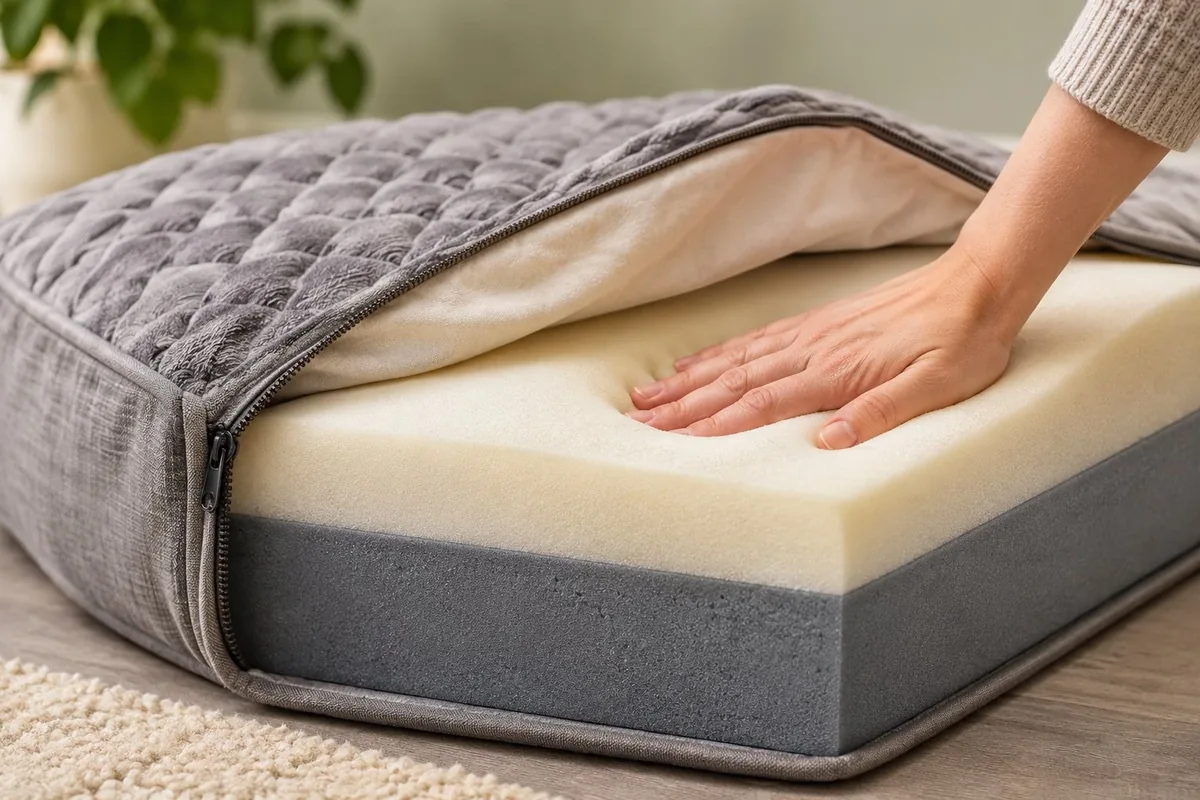
Removable covers make routine cleaning easier. For dogs who have accidents, check whether the mattress has a separate waterproof inner liner and whether the maker explains how to clean it. Avoid soaking memory foam unless the manufacturer specifically permits it; moisture trapped inside can be difficult to remove completely.
Keep the surrounding route safe
Place the bed away from clutter and slippery transitions. Keep water, food and frequently used resting areas accessible. Check rugs for curled edges and ensure a nearby mat does not slide. The best bed still needs a safe route to reach it.
Compare orthopedic bed options on Chewy
After checking the foam, fit and care details in this guide, compare current bed styles and brand options. Confirm the exact foam construction, dimensions and care instructions on each product listing.
These are affiliate links routed through Creator Anchor to Chewy. We may earn a commission from qualifying purchases at no extra cost to you. Product availability and specifications can change.