Weekly Bed Lab · September 2026
Memory Foam for Senior Dogs: Support vs. Sink
Memory foam can cushion and contour—but “more sink” is not automatically better. Here’s a simpler way to compare foam construction for an older dog: watch how the bed supports resting and getting back up.
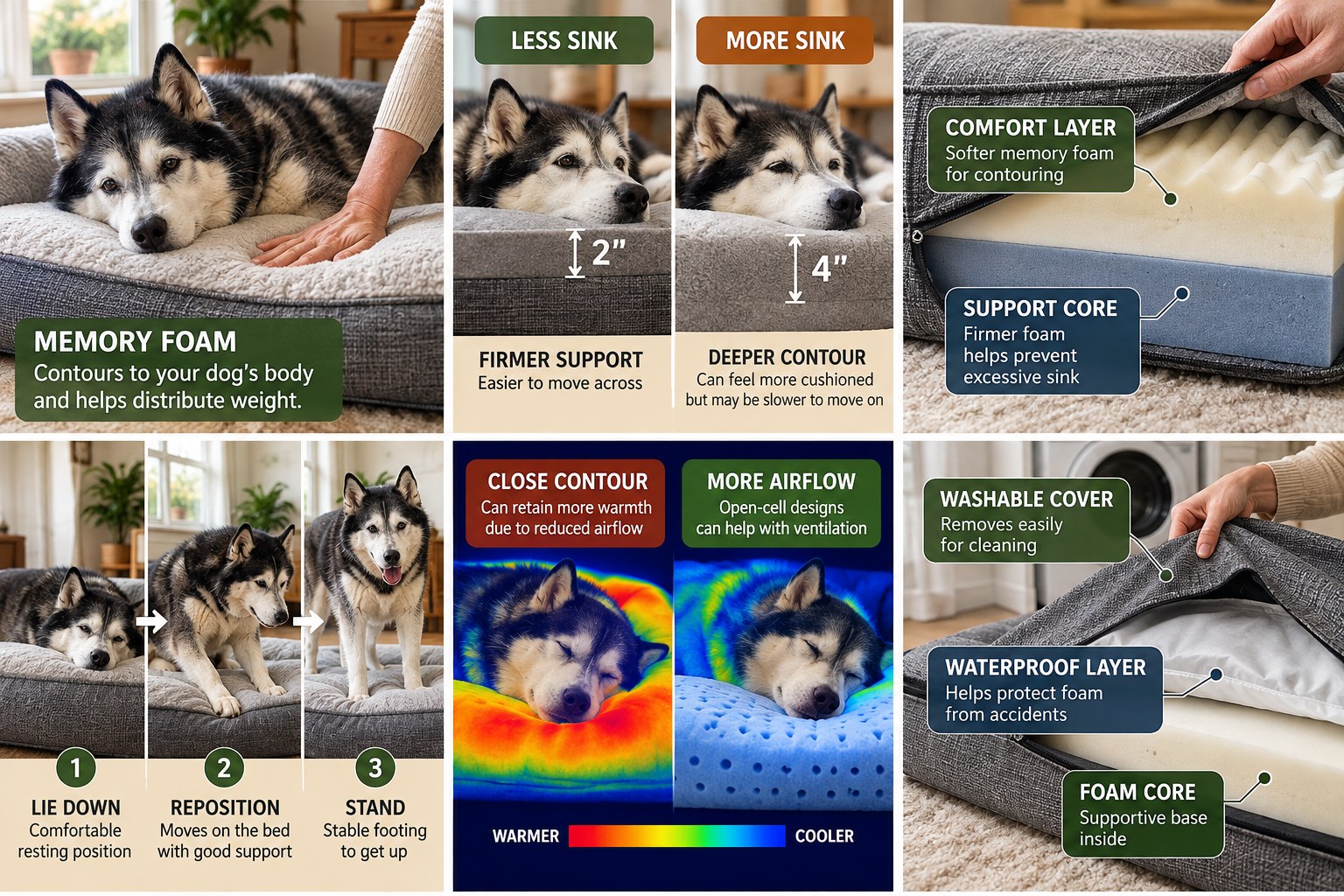
1. Contouring can be useful. Excessive sink can change the feel.
Memory foam is viscoelastic polyurethane foam. It responds to pressure and warmth, slowly molding around the body and distributing load over the surface. That close contour is why memory foam is commonly used as a comfort layer.
But a very deep, slow contour can also make repositioning feel less responsive. Human mattress research documents this material behavior; it should not be turned into a veterinary claim or a universal “best firmness” rule for dogs.
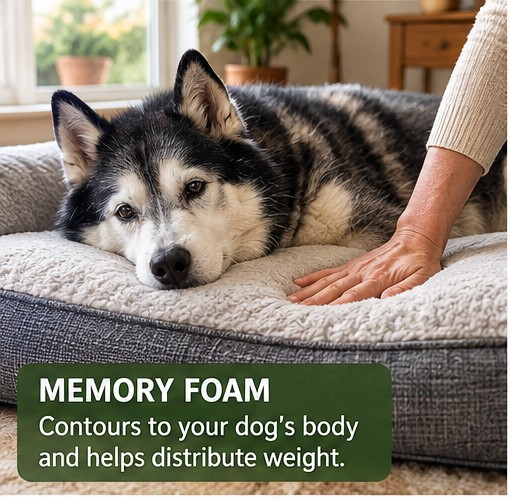
What to observe: cushioning around heavier areas without assuming that maximum softness equals maximum support.
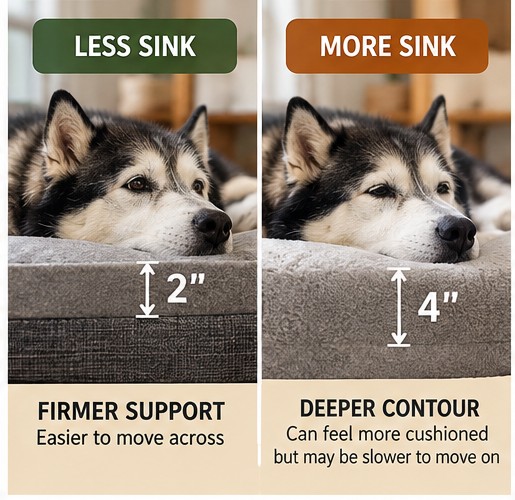
2. Look at sink and recovery.
Two beds can both say “memory foam” and feel very different. Thickness, density, firmness, layer order, temperature and the support core all affect the result.
Instead of shopping by the thickest number on the box, ask what each layer does. A softer comfort layer over a firmer support core can behave very differently from a thick slab of slow-response foam.
3. Density ≠ firmness.
Foam density is mass per unit volume; firmness is how resistant the foam feels under load. They are related to performance, but they are not interchangeable specifications.
If a seller gives only “high-density orthopedic foam,” ask for the actual layer construction. A transparent specification is more useful than a large marketing label.
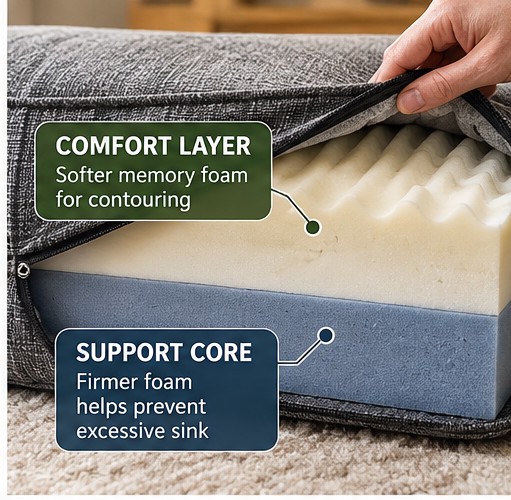
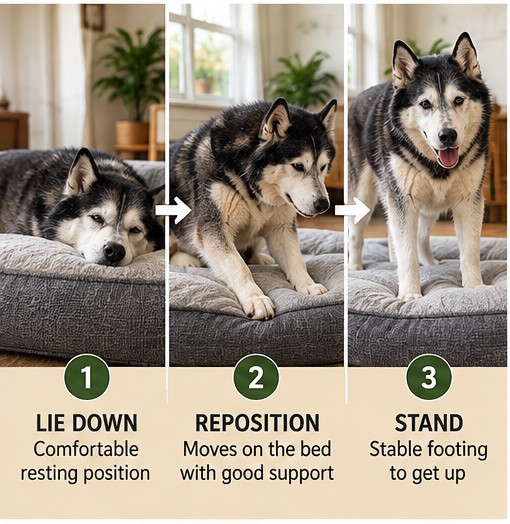
4. Watch the whole lie-down → stand-up cycle.
For a senior dog, the useful test is not just “Does my dog lie on it?” Watch settling, turning, stretching, moving toward the edge and rising.
AAHA’s senior-pet guidance recommends adequately padded bedding, secure rugs or mats on slippery floors, and environmental modifications for mobility-compromised pets. If getting up is newly difficult or worsening, that is a reason to involve your veterinarian—not simply to keep changing beds.
5. Memory foam can sleep warmer.
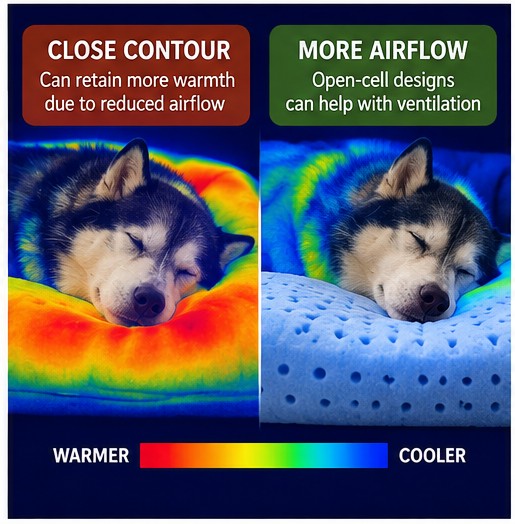
Traditional memory foam tends to retain more warmth because it conforms closely and can limit airflow around the body. Open-cell structures and other cooling designs are intended to improve ventilation, but a “cooling” label does not guarantee a specific temperature result.
For a dog that seeks cool floors, compare cover breathability, contour depth, foam construction and room conditions—not just gel or “cooling” marketing.
6. Cleaning is part of the bed design.
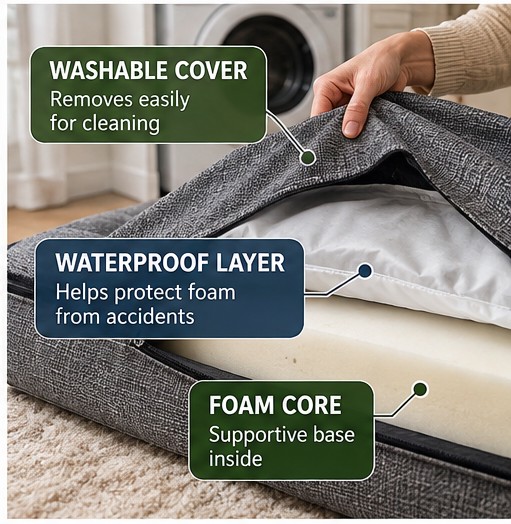
A removable cover is only the first question. Check whether the cover is machine washable, whether a separate waterproof barrier protects the foam, how the zipper is positioned, and whether replacement covers are sold.
AAHA specifically advises keeping senior pets and bedding clean and dry, and notes washable or disposable waterproof bedding covers for pets with incontinence issues.
Seven questions before you buy
What this guide does—and doesn’t—say
There is no universal foam density, thickness or sink depth that this article can responsibly prescribe for every senior dog. Size, body condition, mobility, temperature preference and individual behavior matter. The goal is to make product construction easier to evaluate and to give you observations worth discussing with your veterinarian when mobility is a concern.
Sources & further reading
AAHA — 2023 Senior Care Guidelines: Home Tips — padded bedding, traction, cleanliness and waterproof covers.
AAHA — Supporting Your Senior Pet — environmental modifications including orthopedic bedding for mobility-compromised pets.
Sleep Foundation — What Is Memory Foam? — material behavior, contouring, construction and heat retention. Human bedding source used only for foam-material context.
Sleep Foundation — Mattress Comfort Layers — memory-foam responsiveness, density and construction context. Human bedding source; not veterinary evidence.