Why measure the inner sleeping area?
Outer dimensions can include bolsters and raised edges that reduce the usable flat area. Compare the inside sleeping surface with the way the dog curls, stretches and changes position.
Fit the resting dog, not only the product category or weight label. This chapter translates material-science and veterinary references into practical questions for comparing finished dog beds.
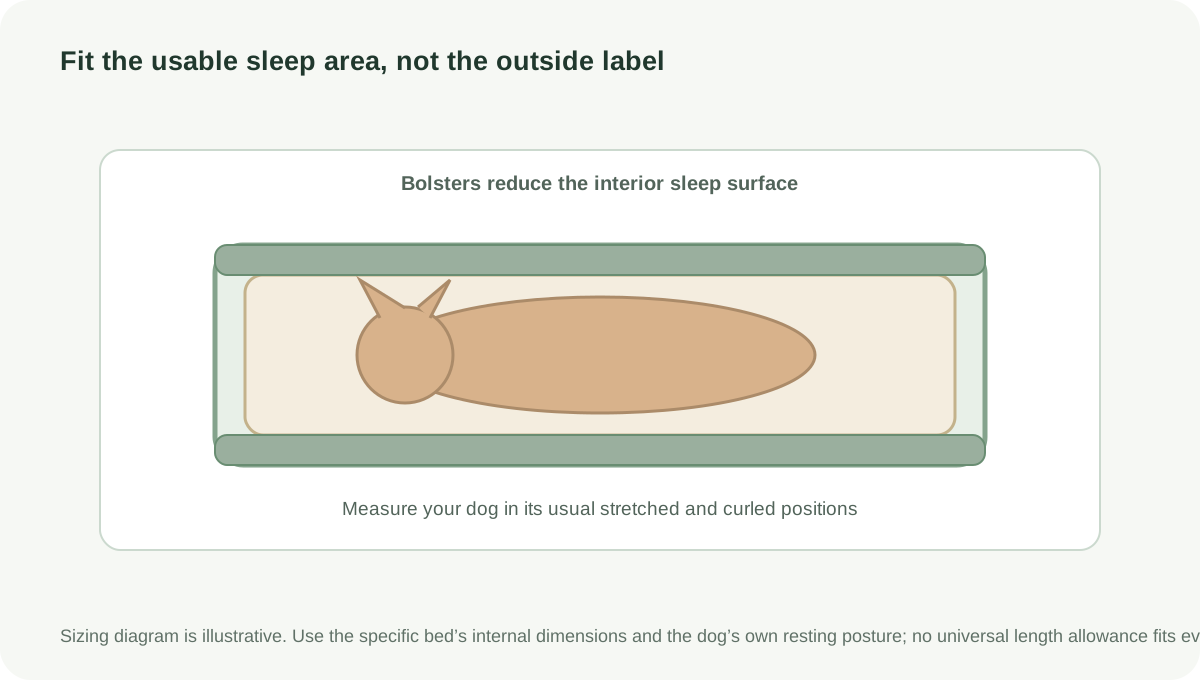
A suitcase’s outside dimensions do not tell you how much fits inside once padding and dividers take up room. A dog bed’s outside measurement is not the same as its usable sleep area.
A dog who curls tightly uses a different footprint from one who sleeps fully stretched. Measure the dog while resting in the positions it commonly chooses, and leave room to turn and reposition. Use more than one measurement if sleep styles vary.
Bolsters, raised sides, seams and pillow edges reduce the flat sleeping surface. Ask for the interior dimensions or usable mattress area—not just the outside footprint. For a flat bed, the usable area may be close to the stated mattress size; for a sofa-style bed, the gap can be substantial.
The height of the sleeping surface, side-wall shape, cover friction and whether the bed slides on the floor affect how practical a bed feels to use. These features should be assessed separately from the foam chemistry. A good foam specification cannot compensate for an awkward step-up or a base that moves on the floor.
Check the dog’s normal sleeping position, internal bed dimensions, mattress thickness and edge design. If mobility changes or standing becomes difficult, seek veterinary advice rather than treating a bed choice as a medical solution. Use a return policy to check real fit at home when possible.
No single weight-to-bed-size chart fits every dog. Breed labels, body weight and outer bed dimensions are only rough clues; individual posture and actual interior dimensions matter.
Outer dimensions can include bolsters and raised edges that reduce the usable flat area. Compare the inside sleeping surface with the way the dog curls, stretches and changes position.
Not for every dog. Entry height, mattress firmness, bed stability, side-wall shape and the surrounding floor all interact. Observe how the dog approaches and leaves the bed, and discuss new or worsening mobility difficulty with a veterinarian.
Weight is only a rough starting point. Body length, sleeping posture, bolsters, usable interior dimensions and personal preference matter. Compare the manufacturer’s interior dimensions whenever they are available.
These answers summarize material and product-selection information. They are not veterinary advice or a substitute for product-specific manufacturer specifications.
These sources support the material-science definitions or the specific research summary above. A foam-material study is not automatically a test of every retail dog bed.
Research library last updated November 7, 2026. See editorial standards for scope and claim policy.